
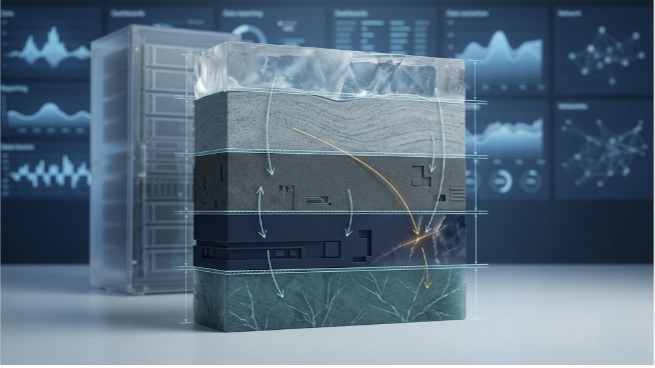
Ask someone to describe a vivid memory from ten years ago and they will give you detail. The weather. What was said. How they felt. They are not lying. They are also not playing back a recording. They are rebuilding the scene from fragments, and the brain fills the gaps so smoothly that the join is invisible. The confidence is real. The detail is partly invented.
Julia Shaw spends a book on this. The Memory Illusion is about how ordinary, healthy memory distorts, edits and fabricates without the person ever noticing. In one study she ran with Stephen Porter, suggestive interviewing led a large share of participants to form detailed false memories of having committed a crime that never happened. The exact figure is still argued over by other researchers, which is the point in miniature: even the people who study memory for a living disagree about how badly it fails, because the failures do not announce themselves. A false memory feels exactly like a true one from the inside.
Human memory is reconstructive, not reproductive. We do not retrieve the past. We rebuild it, every time, and we are confident in the rebuild.
AI memory works the same way. And most teams are building on top of it as if it were a hard drive.
Retrieval is not playback
The last two pieces in this series argued that memory is the variable that decides how an AI system performs, and showed what a real memory architecture looks like once it is built. Both took for granted that the memory layer returns what you put in. It does not always.
A vector store does not store facts. It stores embeddings, and it returns the chunks whose embeddings sit closest to the query. Closest is not the same as correct. A query about your refund policy can pull back the chunk about your returns policy because the two are semantically adjacent, and the model will answer with complete confidence using the wrong document. The store did what it was built to do. It found the nearest neighbour. Nobody asked it whether the nearest neighbour was actually right, because the architecture has no place to ask.
This is the same failure mode as the false memory. The system rebuilds an answer from the fragments it surfaced, the join is invisible and the confidence is identical whether the retrieval was perfect or wrong.
Three versions of it show up in production.
Vector stores hallucinate relevance. Semantic search always returns something. There is no null result, only a ranked list with a similarity score the application usually throws away. When the right chunk is not in the store, the search does not say so. It returns the next-closest thing and the model treats it as ground truth. The worse the corpus coverage, the more confident and more wrong the system gets, because there is always a nearest neighbour to hand.
RAG surfaces the wrong context. Retrieval-augmented generation is only as good as the retrieval step, and the retrieval step fails quietly. It pulls the stale version of a document instead of the current one. It pulls three relevant chunks and misses the fourth that changes the answer. It pulls a chunk from the wrong customer because the namespace was loose. The model receives this context as authoritative and reasons from it perfectly. A flawless chain of reasoning on top of the wrong premise produces a wrong answer that looks rigorous.
Fine-tuned models confabulate. A model fine-tuned on your data does not store your data. It adjusts its weights toward your patterns. Ask it something near but not inside what it was trained on and it will generate a plausible answer in your house style, with your terminology, that is entirely invented. This is confabulation in the clinical sense: a fluent, confident account that fills a gap with fabrication. The fine-tune makes it sound more like you, which makes the fabrication harder to catch, not easier.
None of these are bugs. They are the systems behaving precisely as designed. The error is upstream, in the assumption that memory is reproductive.
The dangerous assumption
The problem is not that AI memory is fallible. Human memory is fallible and humans function. The problem is that teams build as if memory were infallible, and then act on what it returns without a way to tell a good retrieval from a bad one.
A human who is unsure says so. They hedge. “I think it was Tuesday.” “Don’t quote me, but.” That hedge is a signal, and the people around them calibrate against it. An AI memory layer strips the hedge out. The vector store returns its best guess and a similarity score, the application keeps the guess and discards the score, and the model presents the result in the same flat confident register whether the match was 0.95 or 0.31. The uncertainty existed. The architecture threw it away.
That is the gap. Not fallible memory. Fallible memory presented as certain, with the evidence of its own fallibility deleted before it reaches the decision.
Designing for fallibility
If memory reconstructs, the architecture has to assume the reconstruction can be wrong and build for that case as the normal case, not the exception. Three patterns do most of the work.
Score the retrieval and act on the score. The similarity score is already there. Stop throwing it away. Set a floor below which a retrieval is treated as a miss rather than an answer. Above the floor, pass the confidence forward so the model knows whether it is standing on firm ground or thin. A retrieval at 0.42 should not be spoken in the same voice as a retrieval at 0.94. The cheapest improvement available to most RAG systems is to stop pretending every match is a good one.
Fall back to fresh context on a miss. When retrieval comes back below the floor, the right move is not to answer anyway from the closest wrong chunk. It is to widen the search, ask the user a clarifying question or go and fetch the source fresh. A system that knows it does not know can recover. A system that always answers cannot, because it never reaches the point of noticing it should stop. Memory 2 made the namespace boundary a structural rule for this reason: a bad write contaminates every future read, so the read path has to be able to refuse.
Keep an audit trail for memory-influenced decisions. When an AI system makes a decision that matters, the record has to include not just what it decided but what it remembered to decide it. Which chunks were retrieved. What their scores were. Which document version was current at the time. The decision-trace argument from Article 10 applies directly to the memory layer. When a decision turns out wrong, the first question is whether the model reasoned badly or remembered badly, and you cannot answer that question after the fact unless you captured the retrieval at the time. Without the trace, every memory failure looks like a model failure, and teams go and upgrade the model, which fixes nothing.
These patterns share one assumption: memory will return the wrong thing some of the time, and the system has to stay safe when it does. That is the whole design stance. Not better recall. Recoverable recall.
What this is really about
Shaw’s argument about people is not that memory is useless. It is that treating memory as a recording, in a courtroom or a relationship or your own sense of your past, leads you to trust it past the point the evidence supports. The fix is not perfect memory. There is no such thing. The fix is calibration: holding memories with the confidence they have earned and no more.
AI systems need the same calibration, built in. A memory layer that always answers, always sounds certain and never surfaces its own doubt is not a strong system. It is a confident one, and confidence uncoupled from accuracy is the exact failure Shaw spends a book warning about. The model that remembers everything perfectly does not exist. The system that knows when its memory might be wrong, and is built to stay safe when it is, is the one you can actually trust.
Perfect recall was never the goal. It was the illusion.
Sources
- Julia Shaw, The Memory Illusion (2016). The science of how ordinary memory reconstructs, distorts and fabricates.
- Shaw & Porter, “Constructing Rich False Memories of Committing Crime”, Psychological Science (2015). The crime-memory study. Note the subsequent methodological debate over how the false memories were classified, which is itself an example of how hard memory failure is to measure.
- The Forgotten Layer: Memory Is the AI Variable Most Teams Are Missing. Memory is the variable.
- More Than a Model: A Memory Architecture for an AI Coding Agent. The architecture this piece assumes can fail.
- Your AI Knows What It Did. Not What It Decided.. The decision-trace argument, applied here to the memory layer.
Leave a Reply